Graphs to help understand Thrusters
Posted: Tue Jan 27, 2026 3:53 am
I was playing around with thruster math and developed a few rules of thumb that might help others who are as bewildered as I was at first. I've also added them to https://wiki.factorio.com/Thruster
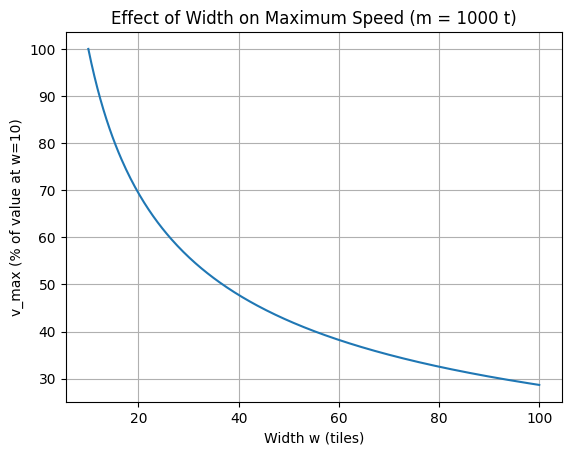
Top speed drops off precipitously as width of the platform increases.
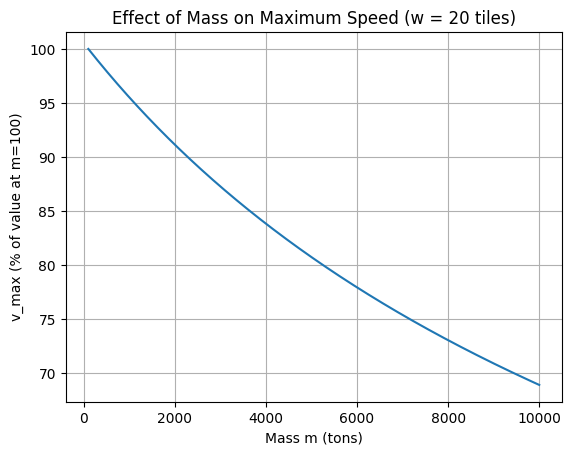
Top speed reduces by only 30 percent with a hundredfold increase in mass.
Travel time is also slightly affected by mass (a few percent) due to the longer time taken to get up to maximum speed, but most of the journey is done at top speed and so travel time is dominated by width. This encourages long, narrow rocket-like platform designs for interplanetary travel.
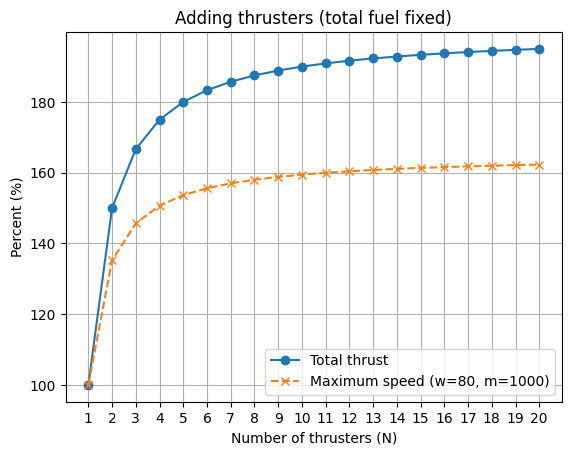
Adding thrusters at a fixed fuel rate increases both thrust and speed, but with strong diminishing returns.
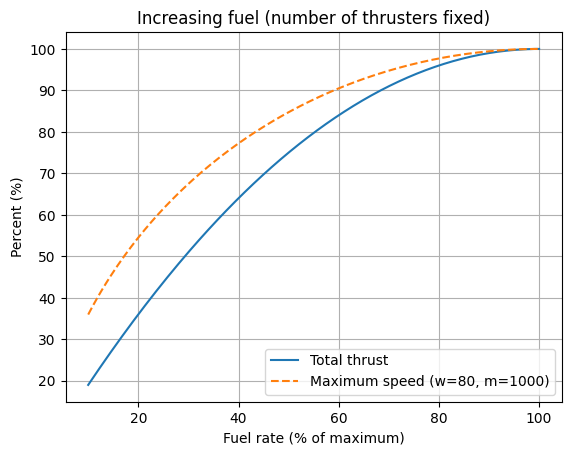
Increasing fuel to a fixed number of thrusters raises thrust and speed, but each extra percent of fuel gives a smaller gain than the last.
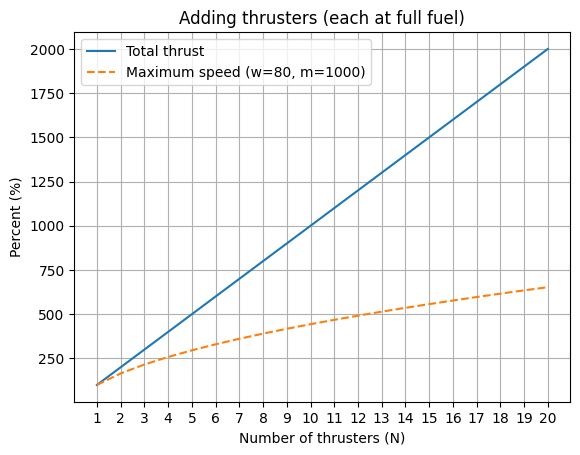
With full fuel per thruster, thrust scales linearly with thruster count, while speed increases with some diminishing returns due to drag.
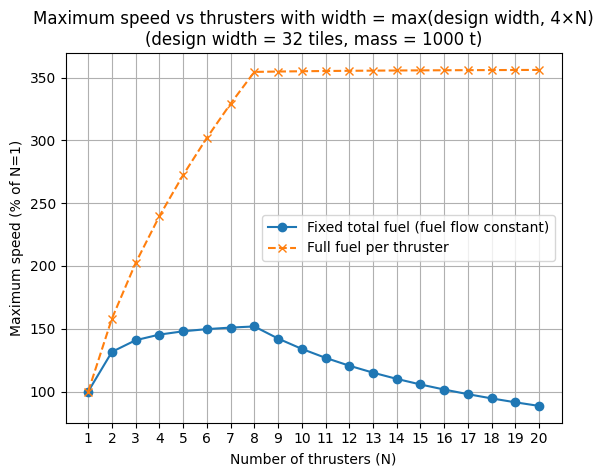
So for example if your platform is 32 tiles wide, the maximum speed is attained with 8 thrusters since each thruster is 4 tiles wide. Note that this does not apply if you add more thrusters without increasing the width of the platform by stacking multiple thrusters vertically.
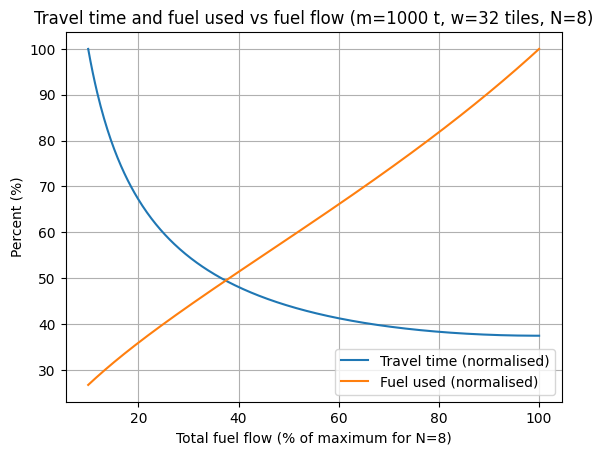
For a typical platform, total fuel used increases steadily with fuel flow, so the least fuel is consumed at the lowest throttle, even though travel time is longest.
The exceptions are for platforms with few thrusters and a lot of drag, or very heavy platforms, where the slowest speed is so slow that it takes less fuel overall to go slightly faster. The optimal fuelling rate in these cases is still generally 15-25% though.
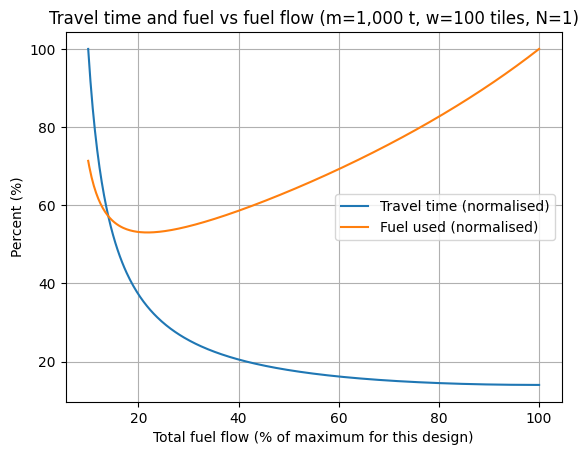
On a wide, low-thrust platform, the slowest speed is so slow that it takes less fuel overall to go slightly faster.
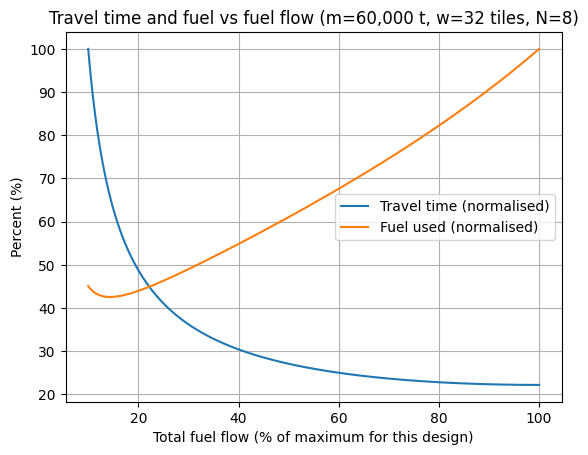
On an extremely heavy platform, total fuel used also has a shallow minimum at low, but not minimum throttle.
I hope this helps!
- Platform width is far more important than mass in determining top speed (and therefore travel time).
- Thrust has diminishing returns in either thrusters or fuel, unless you add both.
- Adding more thrusters is not worthwhile if it requires you to make the platform wider.
- Minimum total fuel volume is achieved at low speeds.
Width dominates mass
Platform drag, which limits the top speed achievable with a given thrust, is strongly dependent on the width of the platform (in tiles) and much less dependent on the total mass of the platform.Top speed drops off precipitously as width of the platform increases.
Top speed reduces by only 30 percent with a hundredfold increase in mass.
Travel time is also slightly affected by mass (a few percent) due to the longer time taken to get up to maximum speed, but most of the journey is done at top speed and so travel time is dominated by width. This encourages long, narrow rocket-like platform designs for interplanetary travel.
Thrust has diminishing returns in thrusters and fuel
Because thrusters increase efficiency with lower fuel, thrust can be increased by adding either fuel or thrusters alone, but with diminishing returns. To get linear gains you need to increase both proportionally.Adding thrusters at a fixed fuel rate increases both thrust and speed, but with strong diminishing returns.
Increasing fuel to a fixed number of thrusters raises thrust and speed, but each extra percent of fuel gives a smaller gain than the last.
With full fuel per thruster, thrust scales linearly with thruster count, while speed increases with some diminishing returns due to drag.
Don't make the platform wider to fit more thrusters
If your platform design before thrusters is a certain width, and you're trying to decide how many thrusters to put on it, then the optimal number of thrusters is as many as will fit without making the platform wider. This is because the additional drag from the extra width cancels out the additional thrust from the extra thrusters. For a fixed fuelling rate, making the platform wider to add more thrusters actually makes it slower.So for example if your platform is 32 tiles wide, the maximum speed is attained with 8 thrusters since each thruster is 4 tiles wide. Note that this does not apply if you add more thrusters without increasing the width of the platform by stacking multiple thrusters vertically.
Fly slow to save fuel
If you're not collecting and manufacturing fuel while you fly, but want to store enough fuel on board for the whole journey, you might be interested in minimising the total fuel volume consumed to make a given trip. In general the slower you fly the less fuel you use overall, as the greater efficiency of the thrusters more than cancels out the longer travel time.For a typical platform, total fuel used increases steadily with fuel flow, so the least fuel is consumed at the lowest throttle, even though travel time is longest.
The exceptions are for platforms with few thrusters and a lot of drag, or very heavy platforms, where the slowest speed is so slow that it takes less fuel overall to go slightly faster. The optimal fuelling rate in these cases is still generally 15-25% though.
On a wide, low-thrust platform, the slowest speed is so slow that it takes less fuel overall to go slightly faster.
On an extremely heavy platform, total fuel used also has a shallow minimum at low, but not minimum throttle.
I hope this helps!
